
CONCRETE PROTECTION GUIDE #3: PROTECTING YOUR CONCRETE AFTER POURING, AND USING OF CURING AGENTS AND CONCRETE DENSIFIERS

Therefore, we thought it might be helpful to put together a guide of general concreting tips that addresses some of the key considerations builders should be across when thinking about concrete slab protection throughout construction.
We’ve previously talked about the importance of slab thickness, types of concrete finishes, and duration of protection, as well as slab pouring location and important environmental factors to consider, but here we’re going to discuss how soon to protect your concrete after pouring, as well as the use of concrete curing agents and densifiers:
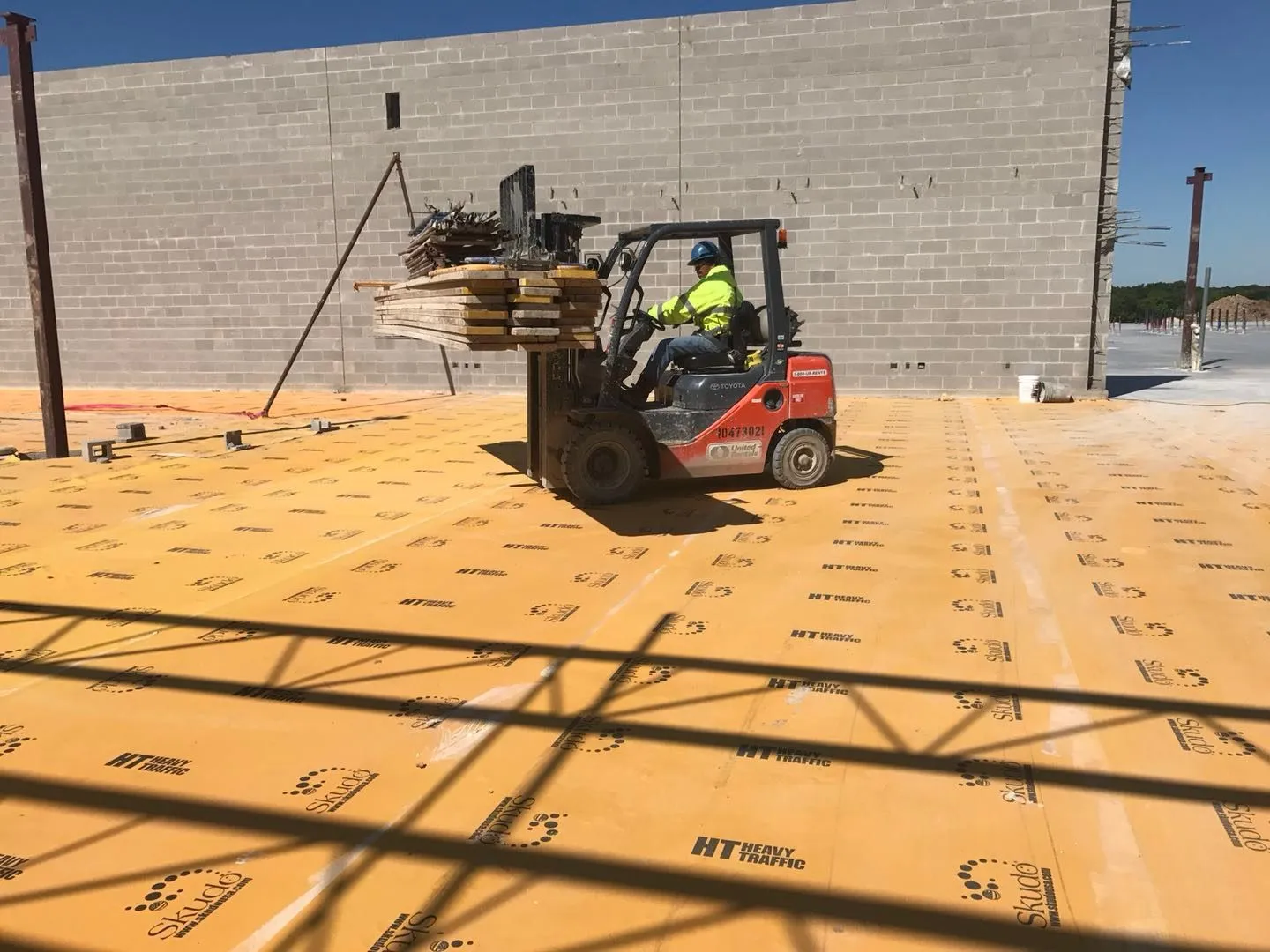
Where possible, it is advisable to allow for open slab time, giving the slab time to breath and allowing for some of the moisture content to expel, prior to laying protection over the slab. This time frame can vary considerably and will depend on the following factors:






In a nutshell, a concrete curing agent forms a layer or membrane over the top of the concrete slab while it cures. This stops the water near the surface of the slab expelling too quickly, and hence helps harden the surface to reduce cracking and dusting. After application there are typically two ways to remove a curing agent prior to applying temporary surface protection.
First is grinding the slab back to remove the top layer or membrane. At this point surface protection could be applied.
The other way is to allow a concrete curing agent to slowly dissipate which will occur with direct UV exposure. This could take up to as long as 60 days, depending on the UV exposure and how much hardener was applied to the slab. Basically, the more curing agent sprayed on the slab, the more time it needs to dissipate.
If temporary protection is laid over a slab after a slow dissipating concrete curing agent has recently been applied, this could cause issues with the surface of the slab, as the curing agent is not able to evaporate properly, getting stuck between the surface of the slab and the protection.
An indication of additives not having adequate time to dissipate prior to the application of protection, is the sign of white stains. White stains are a serious issue, and the only way to remove them is to grind the slab back - which can be very costly.
Therefore, if you decide to use a curing agent or concrete densifier, it’s very important that you check out the TDS (Technical Data Sheet) prior to laying any type of protection over the top.
Make sure to follow the TDS instructions with regards to how soon you can cover the slab with protection, as sealers need time to cure and time for the solvents to expel from the slab prior to the application of protection. Typically, sealer manufacturers state a 24 to 48 hours window between applying a sealer and then covering slab – however, this can vary.

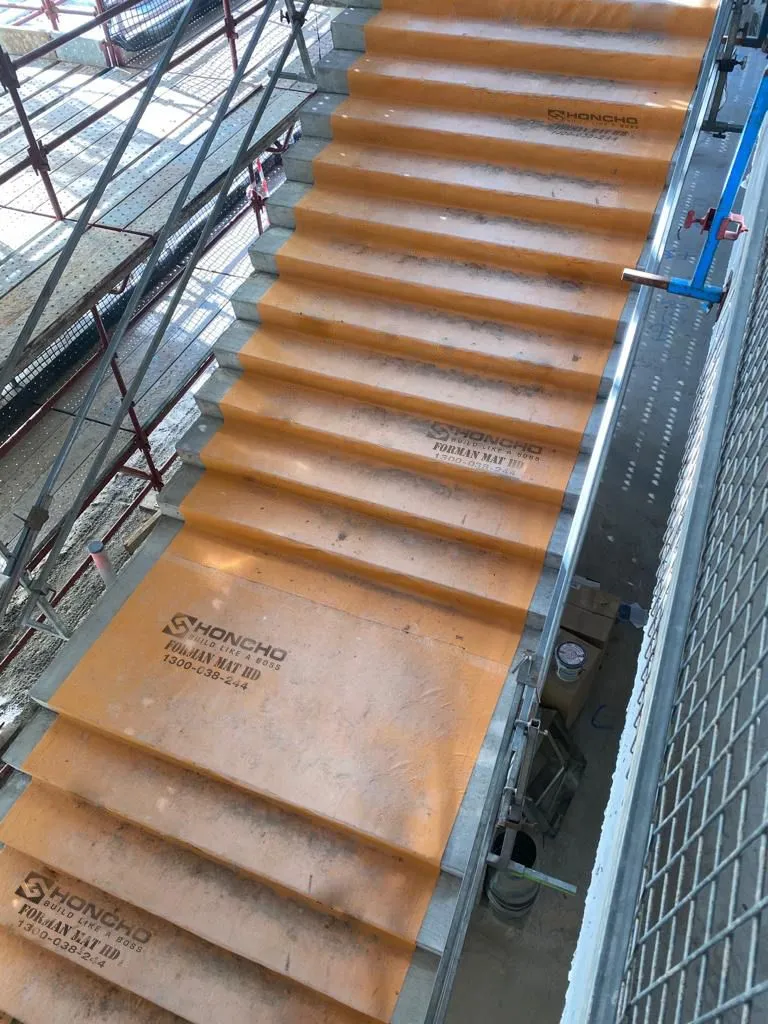
Build Like a Boss With Honcho’s Concrete Protection Solutions
Contact Honcho Supplies
Get the answers you need, submit orders, and find out more information for all your site protection needs here. For a free quote, or to discuss delivery options to your site, send us a message and we will be in touch within 24 hours or one business day.
Orders for collection are available from our Erskine Park and Derrimut warehouses between the hours of 7.30am and 3.00pm Monday to Friday. We work with a third party warehouse provider, therefore all orders must be arranged in advance with one of the Honcho Team members prior to collection.