
CONCRETE PROTECTION GUIDE #1: SLAB THICKNESS, CONCRETE FINISHES, AND DURATION OF PROTECTION

Before we get to the solution though, it’s imperative builders consider the concrete installation process, because when it comes to protection, one size – or rather one solution – doesn’t necessarily fit them all.
Therefore, we thought it might be helpful to put together a guide of general concreting tips that addresses some of the key considerations builders should be across when thinking about how best to protect concrete throughout construction. Let’s start with:
Concrete slab thickness
Understanding the load on a floor plate is the initial step to determining the concrete slab thickness. The thicknesses of your concrete slabs depend on the type of floor slab used in construction and the span of the slab. Generally, as the slab span increases, the concrete slab thickness and weight also increases.
The thicker the slab the more moisture content within, and therefore the more moisture that needs to be expelled prior to laying over any temporary surface protection during construction. All concrete contains moisture, and if the moisture level is too high, it can cause serious damage to the floor if covered too soon with protection (or anything for that matter). In simple terms this means, the thicker the slab the more open slab time needed prior to installing protection.
It is recommended that moisture testing is conducted prior to laying down protection. For the most accurate moisture test, the thickness of the slab must be known. The test requires sensors for measuring relative humidity to be inserted into the slab at very specific depths. This test is called the relative humidity test using in situ probes. Wagner Metres, for example, provides an in situ concrete testing system that conforms to your concrete slab thickness precisely..
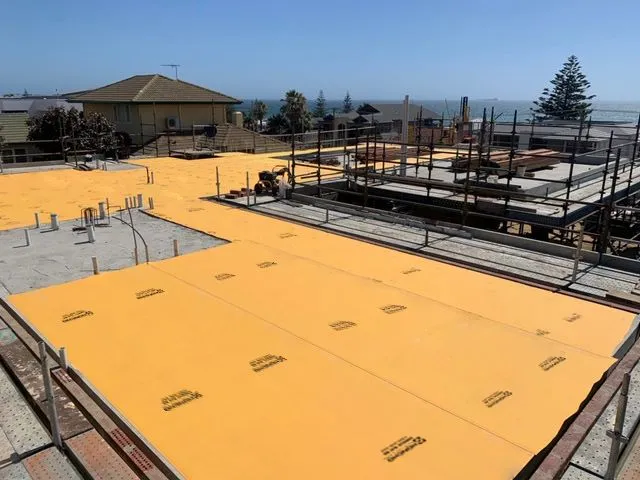
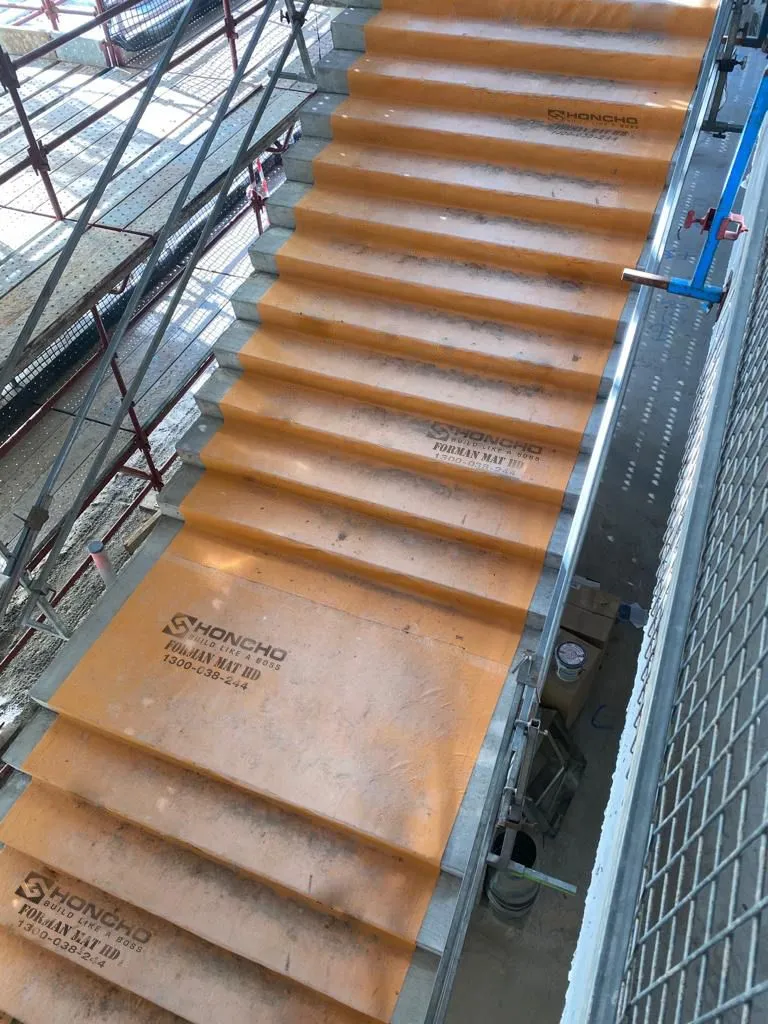
The type of finish that can be applied to a concrete slab is critical when considering protection and timing of application.
There are many different concrete finishes that are used on both commercial and residential sites. These include polished, trowelled, burnished, broom, exposed aggregate, stamped concrete, cove, and more.
Why the finish of a slab is so important is because some concrete finishes are more forgiving of imperfections, while others – such as burnished – are not. For example, cove-based or broom finished slabs are less likely to display imperfections than more refined finishes. This is due to the undulation of these surfaces, making it more difficult to notice imperfections in the slab.
Conversely, with a polished or steel trowel finished slab - the surface is smooth and flat. Meaning any reflection or light coming off the slab will be more noticeable to the naked eye. Which also means imperfections will be more obvious, too.
Therefore, the more polished a slab, the more noticeable issues like marks, streaks, cure lines and tiger stripes will be. And going down with protection too soon could mean capturing moisture and other contaminants expelling from the slab. Thereby creating imperfections on the slabs surface.
By waiting longer to protect (particularly with more refined concrete finishes) and giving the slab adequate curing time, you reduce the chance of trapping moisture & contaminants onto the slab’s surface. Essentially, the more polished or high-end the finish, the more time between pour and protection.
It’s best to consult with an expert on timing, however, standard waiting time is generally somewhere between 14 to 28 days from pour to protection. Obviously, this timing will be impacted by several different variables, of which we have attempted to cover in this document.
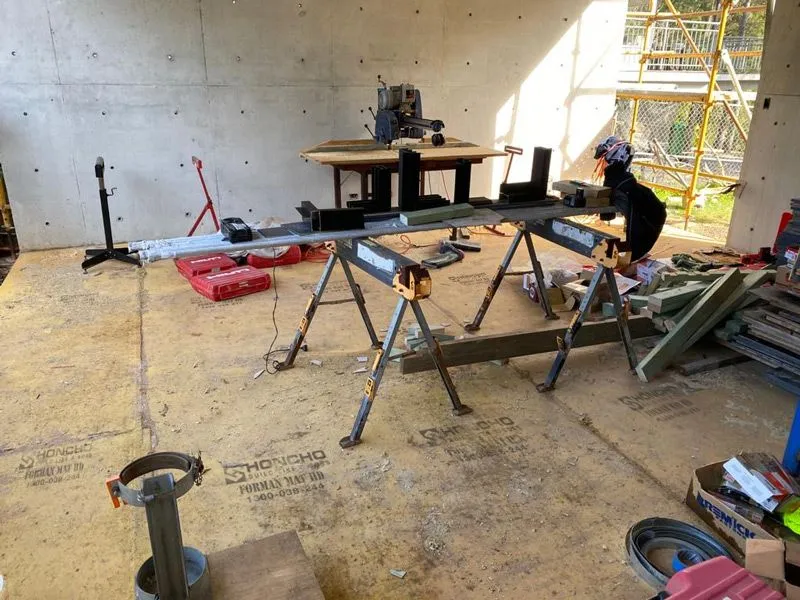
Unfortunately, leaving slabs open and unprotected on building sites is like playing Russian Roulette. Slabs are like magnets for defects such as stains, scratches, and dents. Therefore, protection is a must unless you want to spend thousands of dollars regrinding the slab on completion.
So, why is the duration of protection important when thinking about concrete protection? As mentioned previously, applying any covering too soon, or before a slab has had appropriate curing time could see moisture being trapped onto the slab’s surface, potentially causing issues such as ghost-lines, cure-lines, and tiger-stripes. All of these are costly and difficult to remove.
Duration becomes an important factor then, because the longer and earlier a fresh slab is covered with protection, the greater the risk of moisture being trapped onto the slab’s surface. If incorrectly installed (protection is uneven, crinkled, partially overlapped, or installed too early), this may cause issues over time on the slab’s surface.
Duration is typically less of an issue when only protecting for a short period of time, i.e., two months or less, due to moisture etc having less time to settle and penetrate the slab.
Build Like a Boss With Honcho’s Concrete Protection Solutions
Contact Honcho Supplies
Get the answers you need, submit orders, and find out more information for all your site protection needs here. For a free quote, or to discuss delivery options to your site, send us a message and we will be in touch within 24 hours or one business day.
Orders for collection are available from our Erskine Park and Derrimut warehouses between the hours of 7.30am and 3.00pm Monday to Friday. We work with a third party warehouse provider, therefore all orders must be arranged in advance with one of the Honcho Team members prior to collection.