
CONCRETE PROTECTION GUIDE #2: SLAB POURING LOCATION AND ENVIRONMENTAL FACTOS TO CONSIDER
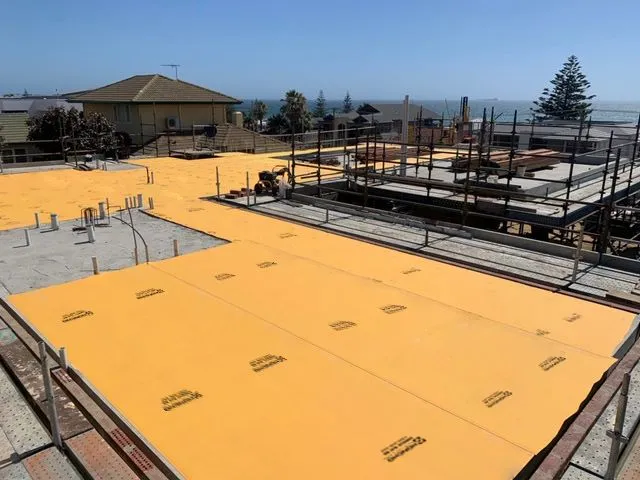
Therefore, we thought it might be helpful to put together a guide of general concreting tips that addresses some of the key considerations builders should be across when thinking about concrete slab protection throughout construction. We’ve previously talked about the importance of slab thickness, types of concrete finishes, and duration of protection, but here we’re going to discuss the location of your slab pouring and environmental factors that are important to consider:
Slab locations
The type and physical location of a slab, (without factoring the location’s environmental or weather conditions), can make a huge impact on concrete slab protection. Factors such as whether the slab is in a subterranean or basement location, versus first and second floor (or higher) can drastically impact timing.
For example, a basement slab would typically take longer to cure than a first or second floor slab. This is because the moisture within the slab may take longer to expel. Conversely, a slab on ground level or higher should have less moisture and therefore take less time to cure.
As addressed previously, all concrete contains moisture, and if the moisture level is too high, it can cause serious damage to the floor if covered too soon with protection (or anything for that matter). So, in simple terms, the more moisture in the slab the more ‘open slab time’ needed prior to laying protection down. This is because any protection installed will trap the moisture trying to expel from the slab onto the surface, which can potentially create curing lines and/or tiger stripes.
It is very important that concrete moisture testing is performed prior to laying down any type of protection over a slab.
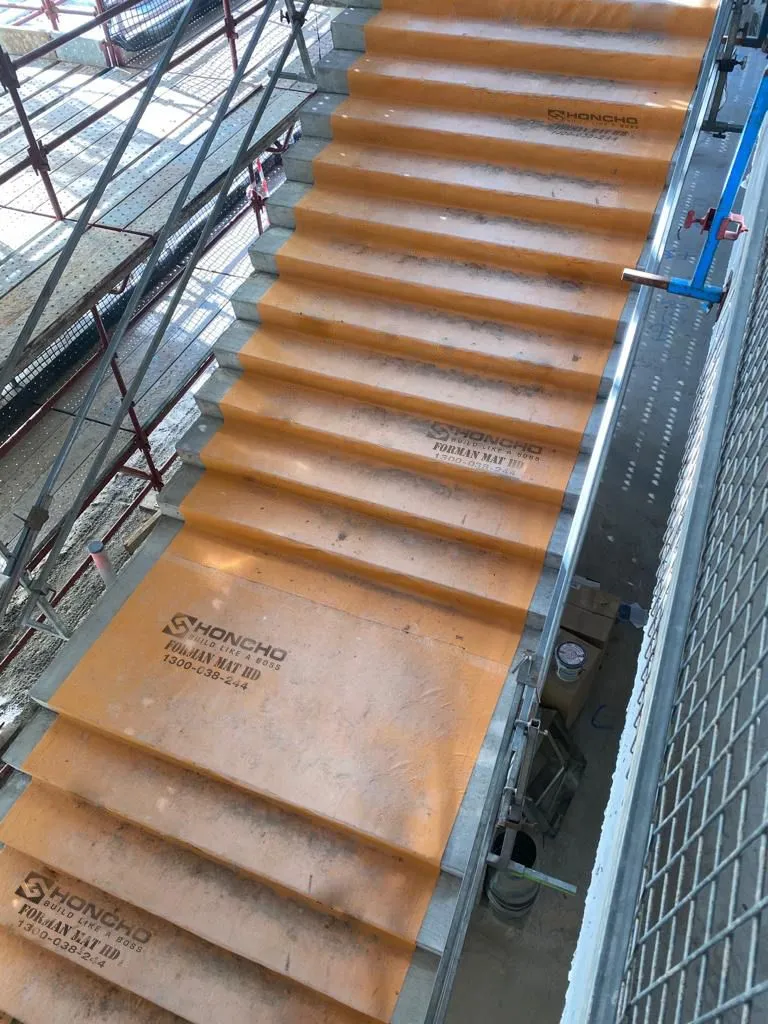
Depending on when you are pouring concrete, whether it's winter, summer, spring, or autumn, the weather will play a big part in the timing of when protection should be installed for proper slab moisture prevention.
Typically, in cooler climates, and depending on the type of slab, you should ideally wait longer between pouring the slab and covering it with temporary protection. This is because the moisture within the slab takes longer to expel, and when there is too much moisture in the slab and it’s covered too soon, then there is more opportunity for cure lines and tiger strips to develop. This is also dependent on how long you are covering the slab for.
In warmer climates, the slab’s moisture expels more quickly, and ordinarily you would be able to cover the slab with protection sooner.
Humidity and rain can also dictate timing. If a slab encounters rain for an extended period soon after pouring, then the moisture in the slab will still be very close to 100%. Therefore, you would need to wait longer before placing any type of protection on the slab.
So, what does this mean when it comes to concrete slab protection and why should you care?
The wetter the slab or the cooler the climate, the more moisture (or time needed) to expel from the slab prior to laying over any surface protection. As mentioned previously, all concrete contains moisture, and if the moisture level is too high, it can cause serious damage to the floor if covered too soon with protection (or anything for that matter). So, in simple terms, the more moisture in the slab the more ‘open slab time’ needed prior to laying protection down.
As mentioned previously, we recommend concrete moisture testing with a moisture metre, such as a Wagner Metre.
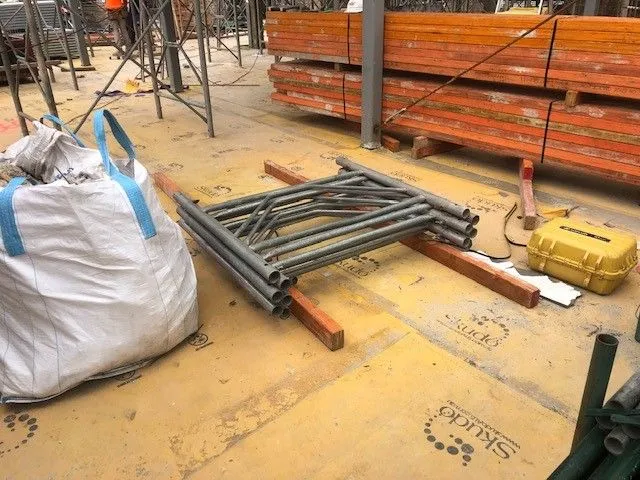

Unfortunately, leaving slabs open and unprotected on building sites is like playing Russian Roulette. Slabs are like magnets for defects such as stains, scratches, and dents. Therefore, protection is a must unless you want to spend thousands of dollars regrinding the slab on completion.
So, why is the duration of protection important when thinking about concrete protection? As mentioned previously, applying any covering too soon, or before a slab has had appropriate curing time could see moisture being trapped onto the slab’s surface, potentially causing issues such as ghost-lines, cure-lines, and tiger-stripes. All of these are costly and difficult to remove.
Duration becomes an important factor then, because the longer and earlier a fresh slab is covered with protection, the greater the risk of moisture being trapped onto the slab’s surface. If incorrectly installed (protection is uneven, crinkled, partially overlapped, or installed too early), this may cause issues over time on the slab’s surface.
Duration is typically less of an issue when only protecting for a short period of time, i.e., two months or less, due to moisture etc having less time to settle and penetrate the slab.
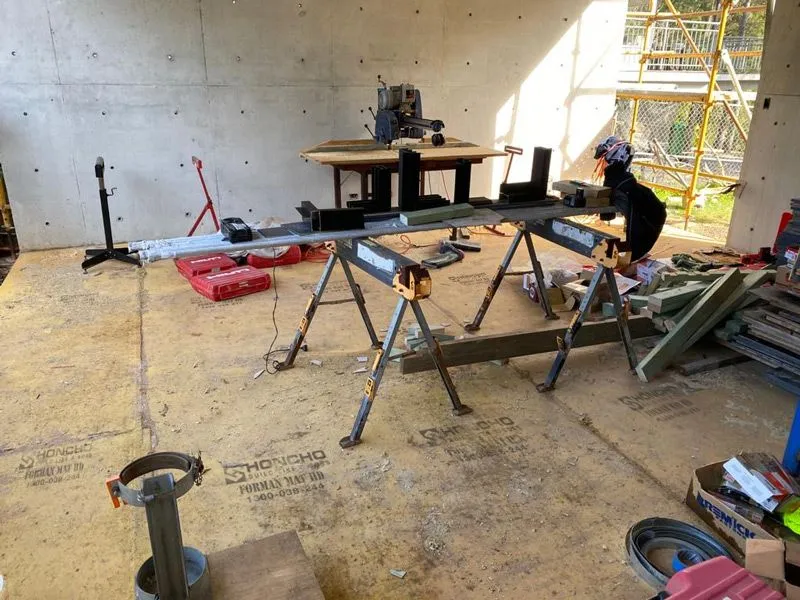

Build Like a Boss With Honcho’s Concrete Protection Solutions
Contact Honcho Supplies
Get the answers you need, submit orders, and find out more information for all your site protection needs here. For a free quote, or to discuss delivery options to your site, send us a message and we will be in touch within 24 hours or one business day.
Orders for collection are available from our Erskine Park and Derrimut warehouses between the hours of 7.30am and 3.00pm Monday to Friday. We work with a third party warehouse provider, therefore all orders must be arranged in advance with one of the Honcho Team members prior to collection.